Publication date: March 2023
Series: Book 1 of the Doomsday Books
LGBTQ+ author? No
Setting: Regency England
Content warnings: Homophobia, violent conflict, kidnapping, murder, child abuse with serious injury, sexual assault and threats of more, on page sex
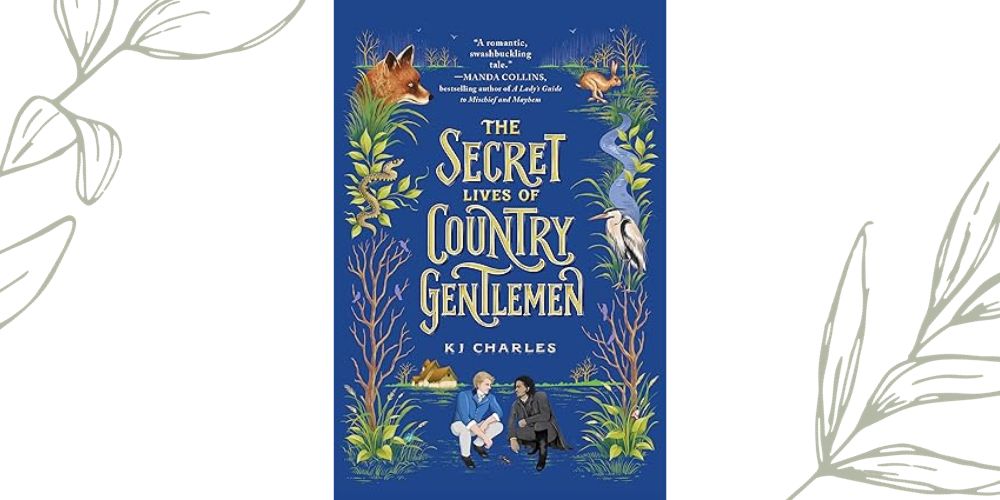
Sir Gareth Inglis was abandoned by his father as a young boy and raised by his uncle in London. When his father unexpectedly dies, he inherits his estate hear the seaside in Kent and becomes a baronet. While he is adjusting to his new home in Romney Marsh, he stumbles across a young woman involved in smuggling and reports it to the authorities.
This is not the thing to do in Romney Marsh, where everyone is involved in smuggling. (It’s the Napoleonic Wars and there is supposed to be no trading with France. But Romney Marsh is awfully close to France and people want their brandy.)
Smuggling is a hanging offence and the older brother of the accused young woman comes up with a way to save her. The older brother turns out to be Joss Doomsday — aka the man that Gareth hooked up with in London. Oopsy!
Out of fear for being exposed for sodomy, Gareth pretends he didn’t actually see any smuggling at all. Joss and Gareth now begin their very tropey enemies to lovers romance.
Romney Marsh was the best character
I am a huge fan of places being main characters and this book does not disappoint. The book takes places near and on a marsh, which swallows up outsiders while it lets marshmen (locals) move with ease. There are hidden pockets of deep water, bushes you can hide in, secret cabins for hot gay sex, and fascinating insects and animals. Marshmen have their own slang that Gareth struggles to learn. It’s all delightful.
Gareth and Joss were also rich, interesting characters. Gareth moved from anger and fear towards Joss’ profession to cautious understanding to acceptance. Joss learned he can’t take care of everything himself and needs to let someone in to help carry the load. Their dialogue felt like being wrapped in a cozy blanket.
However, the supporting characters were a bit two dimensional. Gareth’s teenage half-sister who was portrayed as a bit of a hysterical ditz obsessed with boys and shopping. The bad guys in this story were over the top evil. It was a bit disappointing as the author did such a great job of developing the main characters.
This book is gay not queer
This book is about two men who fall in love with each other. Very gay. But not queer. Queer is not just about the gender of the person you are in a relationship with. Queer is political. A queer historical romance should fuck around with the world the story is set in. And it should also nod to the sensibility of our present day queer readers.
For example, a historical queer romance might put modern ideas of verbal and affirmative consent into historical sex where it probably did not exist. Or it may have the rich, aristocratic person give up their money and power to be with their lover from a more modest background. Or use their money and power for something radical and life changing.
This book did nothing like that. The most radical thing was Gareth realizing that smugglers needed to feed their families too.
Also, a lot of the plot was driven by homophobia. Some people knew Gareth and Joss were lovers and they threatened to expose them over and over again. Even Joss did this to Gareth. This I do not love. Of course homophobia existed in Regency Era, but I prefer it to be a background hum in the historical romances I read.
On race
Joss is biracial. He grandfather is a Black man from the southern United States. At the time this book took place, slavery was still legal in the United States. Despite this, racism does not get the same airtime that homophobia does. Joss was called “boy” by someone in a way that was meant to be offensive. That’s about it!
Was racism not a big thing in the early 1800s? Or did the respect for Joss’ family make it irrelevant? Or did no one know he was biracial? Perhaps it was just a fact of life that did not warrant comment.
This did inspire me to do some research on Black people in Regency England and found this history written by the author Vanessa Riley. She writes.
In London, there were over 10,000-20,000 that lived in London during the time of Jane Austen. The number has been estimated to be as high as 30,000 across England, Scotland, and Ireland. With less than 28 dukes during that time period, who are you more likely to run into, a duke, or a person of color?
As I mentioned, I don’t love homophobia in historical queer novels. So I definitely imagine some BIPOC folks feel the same way about racism. In this way, I liked how it wasn’t really mentioned. However, I don’t often see Black people in Regency era novels. I wish it could a chance to develop a bit more in a positive way. But perhaps this was not the author’s story to tell.
Recommendation
I found this novel very romantic, even if it was not sexy (to me). And I love the setting of Romney Marsh. For those reasons, I would recommend giving it a read. And I am going to read book two.
 Queer Book Reviews
Leave a comment