
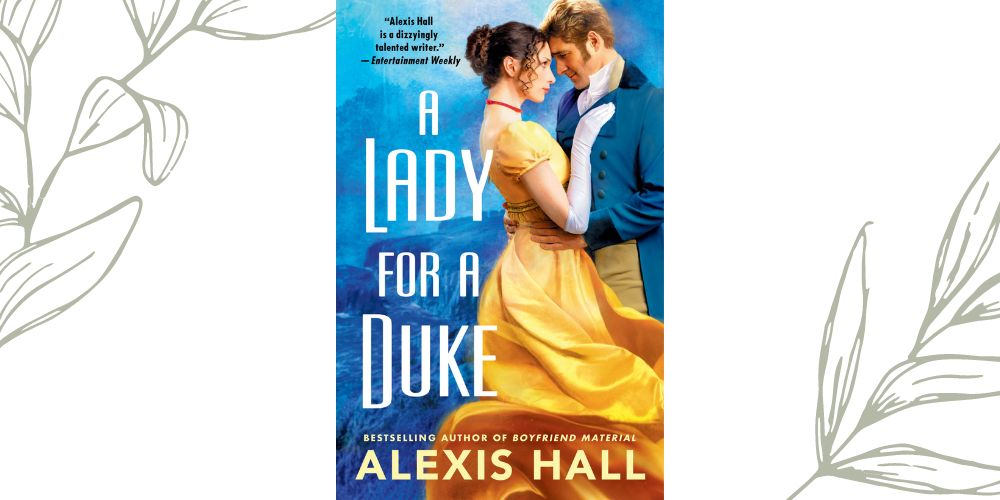
Publication date: May 2022
LGBTQ+ author? Genderqueer
Setting: Regency England
Content warnings: Vivid descriptions of PTSD from war, addiction, brief mention of suicidal ideation (not Viola)
When Viola was presumed dead at the Battle of Waterloo, she took the opportunity to live as herself. She lost her title, her home and her wealth. And she started working as a lady’s companion to her brother’s wife Lady Marleigh.
Years later, Viola is reunited with her childhood best friend Justin de Vere, the Duke of Gracewood. Gracewood is haunted by the horrors of war and the grief of losing his best friend. He does not recognize Viola, but is quickly drawn to her beauty and feeling at ease with her.
The reveal
If we are going to have a story where a man falls in love with a woman before he realizes she is trans, this I think is a fairly sensitive way to write about it.
Gracewood and Viola spend a week together falling in love, before he recognizes her. When it happens, he is so excited to have his friend back. But he is then furious at Viola for not letting him know she was alive sooner.
I felt a bit nervous reading this chapter, on edge for any whiff of trans panic. Alexis Hall wrote this very carefully, making sure that Gracewood’s anger was about missing Viola and not her gender change. Viola argues she needed this time to become her true self. Gracewood argues she did not. This stung a bit to read. But Gracewood comes around quickly and apologizes.
Acceptance
Gracewood never wavers in his attraction or love for Viola, which is a soothing balm in this modern world where trans people are often treated poorly. He barely skips a beat in understanding that the person he grew up with, went to Cambridge with, drank and went to brothels with, and went to war was always this beautiful woman before him.
When the two finally have sex, it’s handled so beautifully. Gracewood is only attracted to women, and he reassures Viola that nothing about her body makes her less of a woman. It’s Viola’s first time, so she is understandably nervous and unsure. But the two of them sort things out rather quickly.
I also felt warm and cozy that so many people in Viola’s life just immediately accepted her. Nothing to it.
Alexis Hall has a section of her website where she answers why she doesn’t portray “realistic” attitudes towards LGBTQ+ people in historical fiction. He writes in his bio, “There’s a tendency to assume that historical attitudes to, well, everything are just modern attitudes to everything but getting linearly worse the further back you go, and that’s not true.” They also describe themselves as a novelist, not a historian, and therefore can write whatever they want.
I love fantasy and historical fiction, which I found at odds until I eventually realized they were the sort of the same thing. Both are stories set in a made up world based on some loose conventions in order to tell a story about our modern times.
I listened to the audio book which was narrated by a trans woman named Kay Eluvian. I thought that was a nice touch!
What didn’t work for me
I am all for long, fluffy books but this book was REALLY long with hardly anything happening. The audio book was 15.5 hours long! It was a safe cozy place to be, so not the worst thing.
I am also not that into M/F romances, which is just my personal preference. Nothing against this book. If I was going to recommend an M/F romance, I think this was a great one to read. Viola’s lived experience being treated like a man and a woman let’s us explore the narrow gender roles for everyone in this time period in a truly original way.

 Queer Book Reviews
Leave a comment