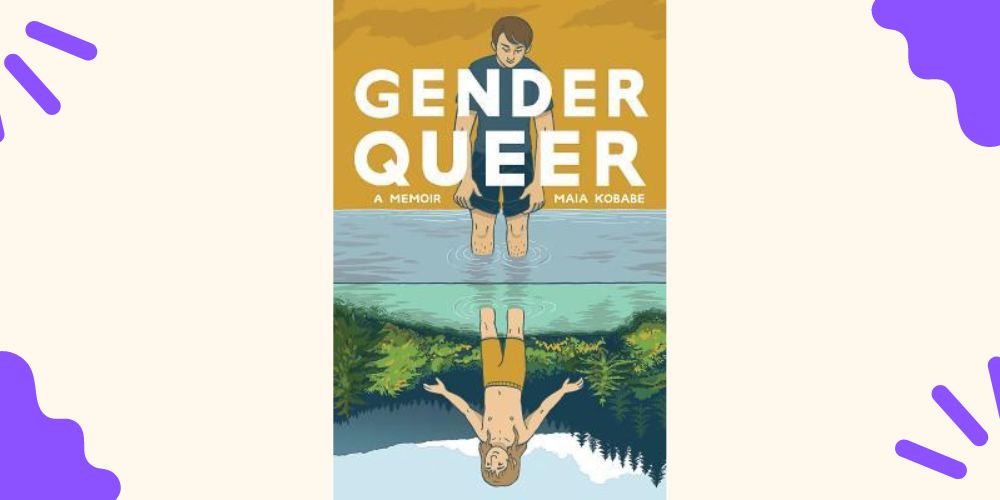
Publication date: May 2019
LGBTQ+ author? Queer, non-binary, trans
Setting: Modern day California
I had been following Maia on Instagram for a while before I took the plunge and bought eir book Gender Queer. I still remember how it felt when I read it for the first time. Just lightness and pure joy.
I was in my late 30s and still trying to figure out my gender that wasn’t female and wasn’t really male either. And although I didn’t relate to everything, something about eir very specific feelings and experiences resonated so much with me.
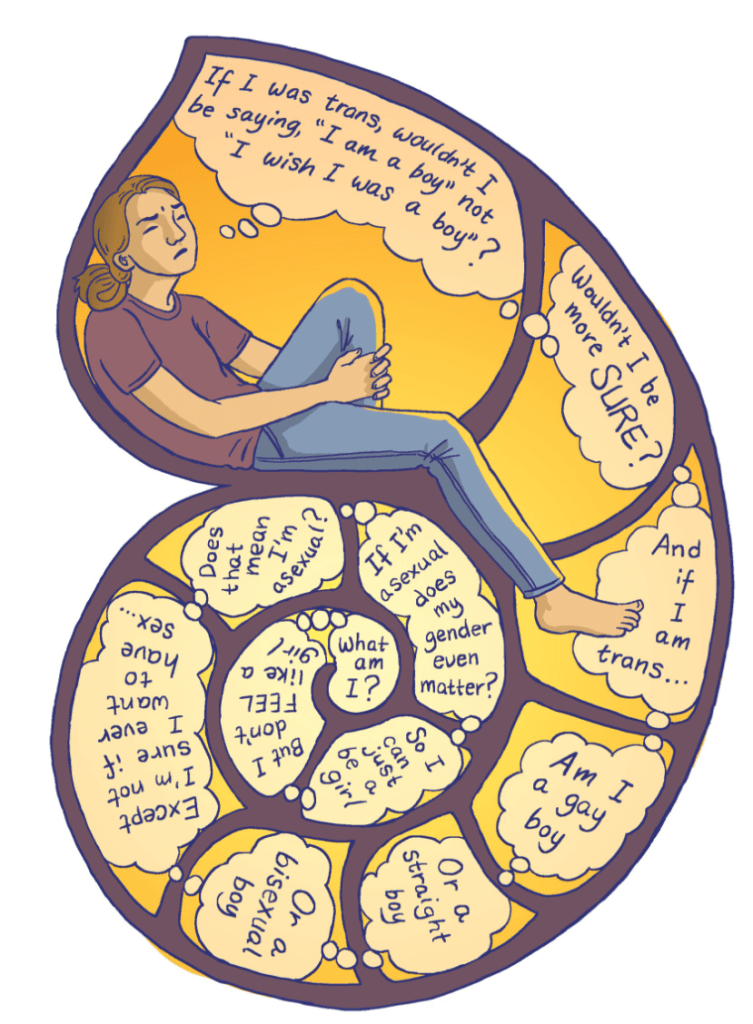
I shared how much I loved this book on my Instagram. I noticed I couldn’t tag the author, which was weird but whatever.
And then the negative comments started coming in to me! From random people I didn’t even know.
This is how I learned this book is the most challenged book in the United States. And all online discussions of this book had been tainted by conservative nonsense about it corrupting our children. (And it makes sense why I couldn’t tag Maia!)
The follower who messaged me told me how inappropriate it was for children because of the sexual imagery. I kept reading and when I had finished the book I still had no idea what she was talking about.
Maia talks about gender identity and sexuality a lot, which does involve having a body. I am not suggesting it’s for six year olds, who honestly would not be interested or understand it anyway.
But high school students have genders and sexualities. They have the internet. They watch TV. Nearly 40% of high school students have had sex, and they think the number is probably even higher. How could they be harmed by watching someone talk about getting their period or thinking about buying a vibrator? Seriously. They have unfettered access to actual porn on their phones!
Anyway, it makes me made all these years later that my joy in discovered this book was interrupted to argue with a random internet person.
So I read the book again, peacefully. And now I am writing this review to say I love this book very much.
“When you remove those books from the shelf or you challenge them publicly in a community, what you’re saying to any young person who identified with that narrative is, ‘We don’t want your story here’,”
Maia Kobabe in the NYT
And if you haven’t read it yet, I hope that you do!
 Queer Book Reviews
Leave a comment